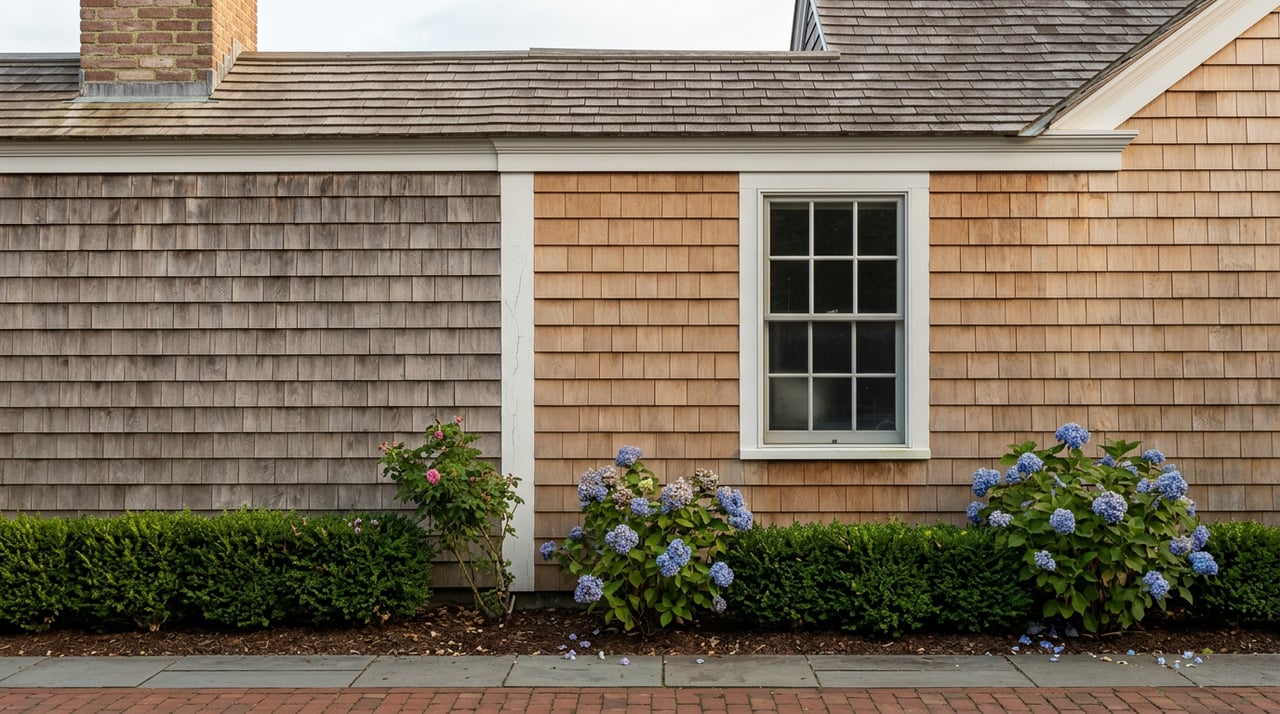
On January 16, 2026, an inspector with the Town of Nantucket's Planning and Land Use Services office drove out to 9 New Jersey Avenue in Madaket to check on a project that had already cleared the town's review. The file showed an approved addition and a historic renovation. What the inspector found instead was an empty lot. The cottage was gone. So was the small garage next to it, as Nantucket Current reported.
The violation notice that followed went to the property's owners, a couple from Newton who had bought the place in 2019 for $835,000. A contractor had walked the project through the Historic District Commission under language that said "renovation" the whole way.
The Paperwork Doesn't Follow the Person Who Filed It
Most guides to Nantucket's Historic District Commission walk you through the mechanics of getting a Certificate of Appropriateness: what triggers review, how the meeting schedule works, what to bring to your first hearing. That process matters, but it isn't where the risk actually sits for someone buying, selling, or building on Nantucket. The risk sits in what happens after the certificate is issued. The Town of Nantucket says a Certificate of Appropriateness is valid for three years from the date it's issued, and if what actually gets built doesn't match what the commission approved, the mismatch becomes a property problem, not a paperwork problem.
That distinction showed up again in April, when the 9 New Jersey Avenue case came back before the commission and a contractor tried to argue that the demolition had been implied by the design the board already approved. One commissioner, Joe Paul, pushed back, as reported by Nantucket Current:
"It really does put a spotlight on these subtle shifts in a drawing that can actually mean major changes in the field. A subtle shift in a ridgeline maybe originally goes up a foot, but it means the roof is coming off."
That's the whole problem in one sentence. The commission reviews drawings. The house that eventually stands there is built by someone else, months or years later, and the gap between the two is exactly where disputes like this one live.
How Violation Fines Compare with Project Costs
Violation fines are one consideration when evaluating an older Nantucket property. The Town's code sets the standard violation fine at $300, with each day of continued noncompliance counted as a separate offense. That sounds like it adds up quickly, and in theory it does. But the Madaket case settled differently. The town's "as-built" fines, calculated at ten times the standard HDC fee, came to $1,000 for the demolished dwelling and $500 for the garage. Fifteen hundred dollars, paid once the owners submitted new applications for a replacement dwelling and garage.
Set that number against what new construction actually costs on this island, and against a property that had already cost $835,000 back in 2019, and the arithmetic starts to look less like a deterrent and more like a line item. This issue has also been raised in local discussions. A local preservation artisan and carpenter named Hollis Webb filed a citizen's petition this spring proposing that demolition of any structure over fifty years old require a supermajority vote of the commission rather than a simple majority. The petition followed a 3-2 vote that allowed demolition of the former Nantucket Electric Company building on New Whale Street. Whether or not Webb's petition ever takes effect, it reflects an ongoing debate on an island where teardown value and preservation value can pull in opposite directions.
Understanding the Appeals Process
The appeals process is another consideration for buyers evaluating an HDC condition. In February, the Select Board unanimously upheld a Historic District Commission condition requiring the relocation of a driveway before approving a front facing solar array at 65 Polpis Road. The solar company's representative argued the commission had invented a standard that didn't exist in its own guidelines. The decision turned on the limited scope of the Select Board's review. Board members can only overturn a commission ruling if it was arbitrary and capricious, a bar that is rarely met.
For a buyer, it is useful to understand any conditions attached to an approval and the status of any planned appeal. If a seller mentions that a condition feels unreasonable or that they plan to appeal it after closing, review the approval and the appeal process before proceeding. The commission's decision may be difficult to overturn, and an appeal may take time.
How the Commission Reviewed Town Demolition Applications
This summer, the commission reviewed demolition applications submitted by the Town of Nantucket, as reported by Nantucket Current. The applications covered three structures, including a house on Washington Street the town wanted to clear for staging space during other construction, and a building on Okorwaw Avenue the town hoped to redevelop into municipal workforce housing. The commission sent both applications back unanimously.
"Our mission is to keep Nantucket what it is."
—Val Oliver, as quoted by Nantucket Current.
Fellow commissioner Angus MacLeod also opposed the proposed Okorwaw Avenue demolition, despite its stated public purpose. The town had also framed part of its case around coastal resilience, arguing that removing a structure near the waterfront reduced exposure to storm surge and sea level rise. That outcome illustrates why buyers should review the status of any proposed work and its applicable conditions.
What This Means If You're Buying, Selling, or Building
None of this means the process is unmanageable. Straightforward projects, a repaint, a window swap, work that doesn't touch the exterior footprint, can clear commission review in a matter of weeks. Additions and new construction take longer, often several months, particularly if the commission asks for revisions the way it did with a stepped house design in Siasconset earlier this year over concerns about porch scale and roofline massing. The commission meets weekly, so a complete application moves faster than an incomplete one sitting in a queue.
For property owners, both the file and the finished house matter. Before you write an offer on an older Nantucket property, or list one that's had recent work done, a few questions are worth asking directly:
- Ask for the Certificate of Appropriateness file number for any exterior work completed in the last several years, and compare what's on the approved plans to what's actually standing. The 9 New Jersey Avenue case shows how far those two things can drift apart.
- If a condition was attached to an approval, screening for a condenser, a setback fence, a driveway relocation, confirm it was actually completed and inspected, not just promised.
- If a seller describes recent work as a "historic renovation," ask whether that's how it was listed on the commission's own agenda.
I've spent close to two decades building on this island as well as selling it, and the properties that cause the fewest headaches at closing are almost always the ones where the paper trail and the physical structure tell the same story. When they don't, the gap doesn't disappear at settlement. It just changes hands.
If you're weighing a purchase, a sale, or a redevelopment project anywhere on Nantucket and want a clear read on what a property's history actually looks like on paper, not just in the listing description, Let's Start a Conversation.
This article is general information, not legal, tax or financial advice. Consult a qualified professional about your situation.