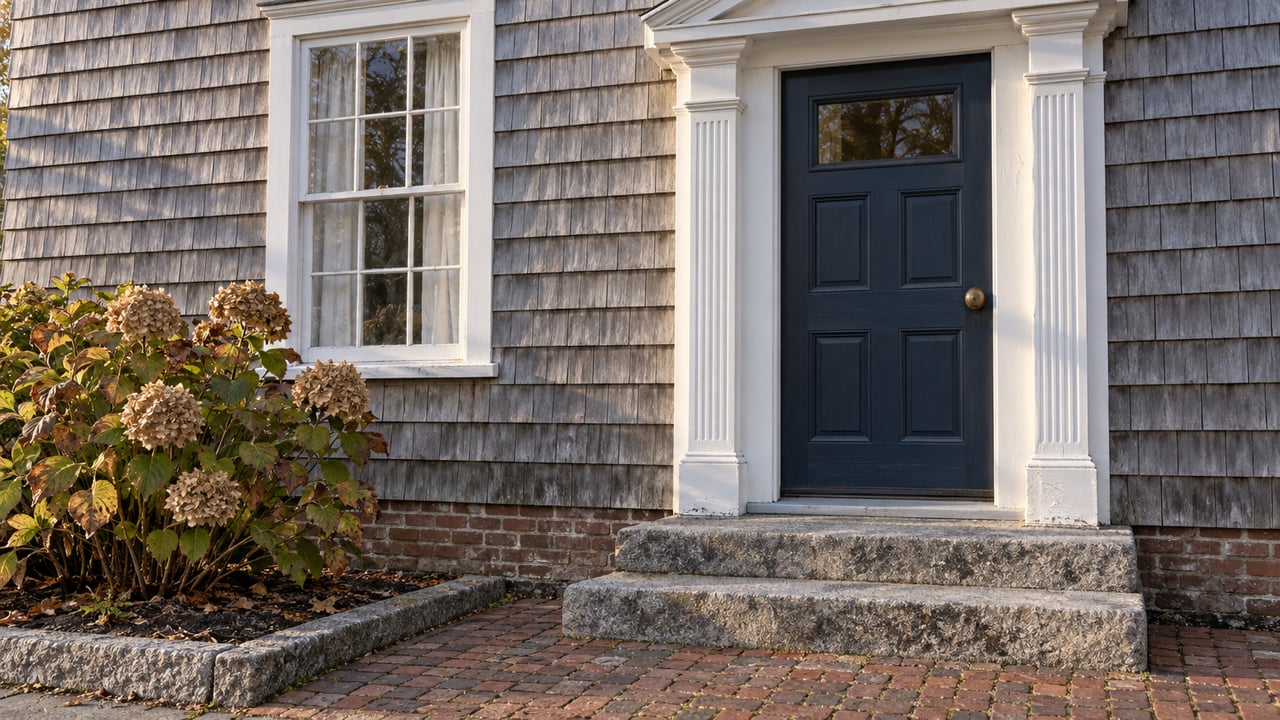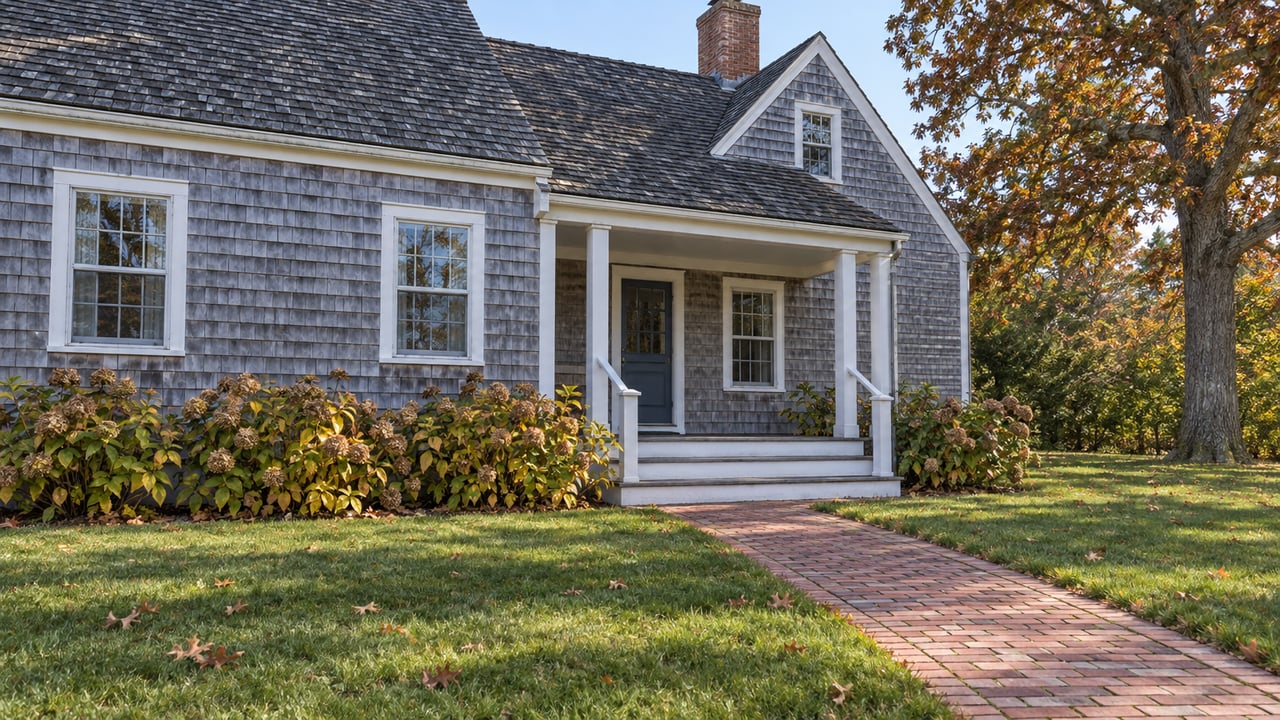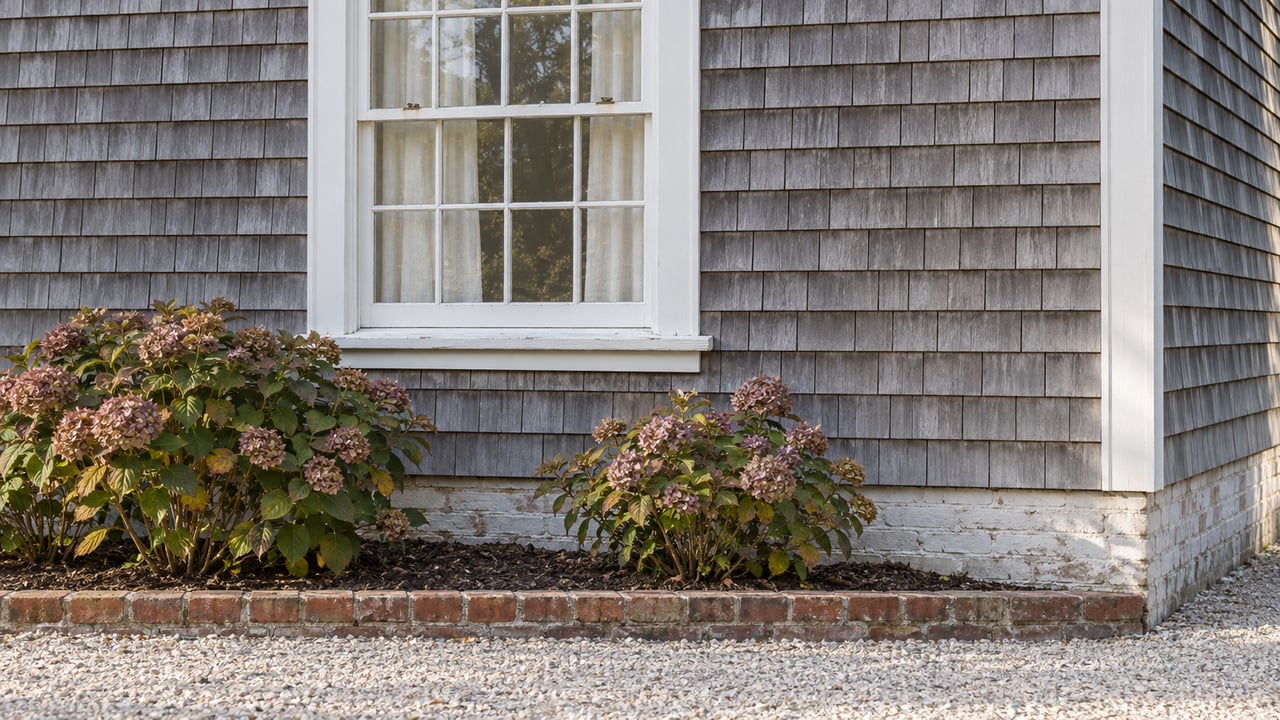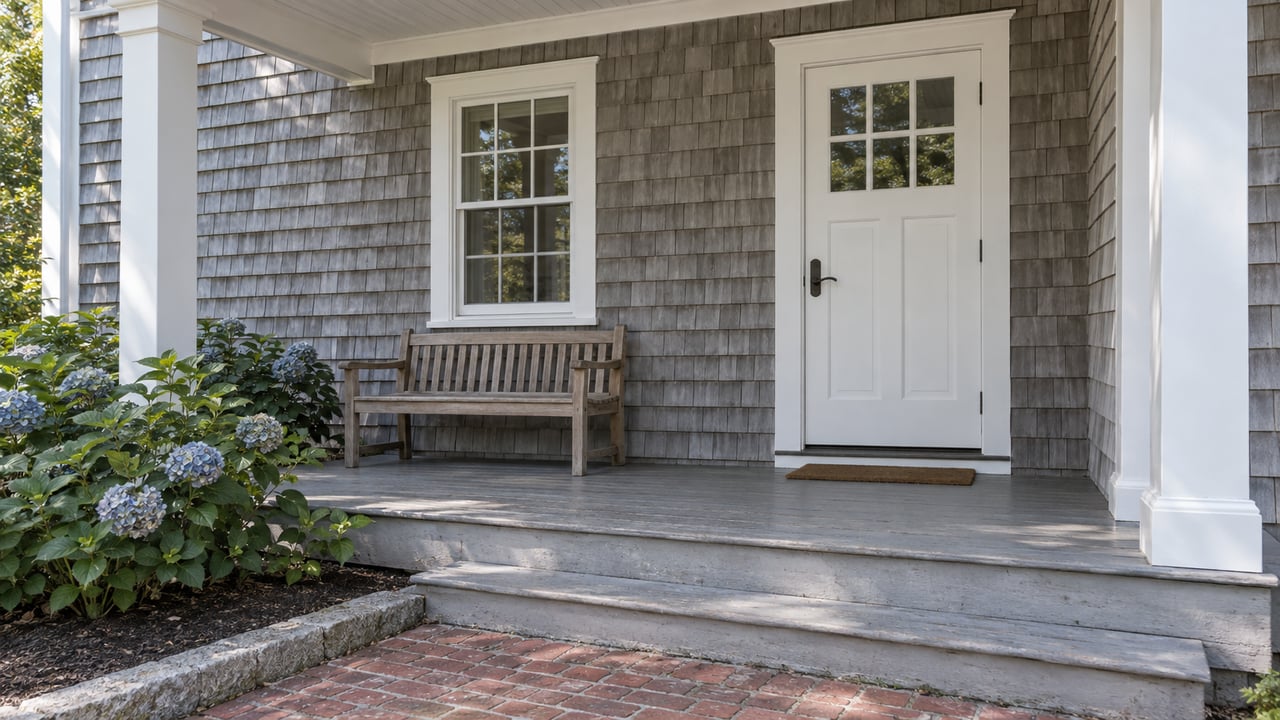
Most buyers arrive at Cisco with a single mental image: surf breaks, the bike path out from town, a beer at the Brewers on a July afternoon. They price the neighborhood accordingly, then get quoted numbers that feel of a piece with Cliff or Brant Point. One recent island market report groups Cisco with Cliff and Brant Point in the roughly $5M tier, with typical homes around 3,400 square feet, four to five bedrooms, pools and guest cottages standard, averaging just 79 days on market in 2025.
That grouping is where the confusion starts. Cisco is not a single price tier. It is a neighborhood bisected by an erosion gradient that has quietly inverted the usual coastal rule. Waterfront is no longer automatically the top of the stack. In parts of Cisco, the durable value has moved inland, along the bike path and the farm road corridor, while the oceanfront parcels have become the speculative position. If you are underwriting a Cisco purchase off the island median, you are pricing the wrong asset.
Lead with the friction, because the friction is the story
Barry Sternlicht's three-bedroom house between Hummock Pond and the Atlantic was approved for emergency demolition by the Nantucket Historic District Commission after severe erosion left no room to retreat further on the lot. He had purchased 289 Hummock Pond Road out of foreclosure in 2010 for $610,000, and acquired the adjacent 287 Hummock Pond Road in 2019 for $1.3 million, with a plan to slide the home to the safer lot. Hurricanes Paulette and Teddy in fall 2020 wiped out a significant portion of the beach and access road, forcing the demolition of the structures at one property and leaving the remaining home on steel girders.
That is the headline case. The one that should matter more to a buyer is quieter. A 2,625-square-foot property on Sheep Pond Road first listed in September for nearly $2.3 million, still below the island median at the time, saw its shoreline lose roughly 70 feet in a matter of weeks and closed by year's end at $600,000. A cash buyer picked it up in February after the price alert.
Nantucket's climate resilience coordinator Leah Hill has said that if the town fails to reduce coastal risks through 2070, nearly 2,400 structures are at risk from coastal flooding and erosion, with annual damages estimated at $3.4 billion.
The public infrastructure has already moved. NOAA's "High" sea level rise scenario predicted the entire front parking lot at Cisco Beach would be eroded by 2030, and the Nantucket Land Bank began planning a replacement in 2021. The Land Bank chose a site west of the Beach Access Road, oriented the new lot perpendicular to the shore so fewer spots would be lost at any one time as the coastline shifts, received permits for the 65-space lot in June 2024, and phased the construction. When the beach's own parking lot is being engineered around erosion, a private lot two doors down cannot pretend the mechanism does not apply.
The transaction-level consequence: local agents Shelly Lockwood and Isabelle Perkins worked with Hill to develop a continuing-education class on coastal resiliency and climate risks for Nantucket agents, out of a concern that "if we get known as people who will just sell anything, that hurts all of us." Diligence on a south-shore Cisco parcel now involves questions that would have been considered exotic five years ago.
What the island numbers say, and what they hide
The mid-2026 read from LINK, the island's MLS, is the same shape as most premium resort markets right now, only sharper.
Through June 30 of 2026, 89 homes sold on Nantucket against 110 in the same stretch of 2025, a drop of 19 percent. Over the same period the median home price rose 11 percent, from $3,300,000 to $3,675,000. Average sale price climbed 18 percent to $4,506,000. Total home-sale volume was $400.99 million, down just 4 percent from $418.87 million a year ago. Far fewer trades, nearly the same money. The island ended June with 167 properties on the market against 245 a year earlier, inventory down 32 percent year over year, with new listings down 24 percent, at 52 for the month against 68 in June 2025.
Now the number that matters most for a Cisco buyer. The median Nantucket home that sold in the first half of 2026 cleared at $3,675,000. The median home listed at the end of June was priced at $5,295,000. The median new June listing was $5,645,000. A $1.62 million gulf separates the median home that sold from the median home on the market, and sellers as a group are asking well above where the island has been clearing.
That gap is the working definition of leverage. It is also the reason a Cisco buyer looking at an oceanfront ask should not treat the printed number as a market read. In verified June closings, buyer leverage was strongest above $5 million and in listings that had spent more time on the market, while under $3.5 million the well-priced homes remained competitive. Cisco listings frequently sit above that $5 million line. The question is whether the seller understands which side of the erosion gradient they are on.
The inland corridor is doing quiet work
Walk the neighborhood from the town side and it is easy to miss how much of Cisco's daily texture sits inland from the bluff. That is exactly where the value is compounding.
Bartlett's Farm sits on 200 acres of agricultural land about two miles from downtown and less than a half mile from the southern shore, now in its seventh generation of Bartlett family ownership since William Bartlett arrived in the early 1800s. Down the road, Nantucket Vineyard, Cisco Brewers, and Triple Eight Distillery sit side by side at 5 Bartlett Farm Road, and the town's free Cisco Van runs from the corner of East Chestnut and Federal Streets straight to the brewery, roughly 2.5 miles out. 167 Raw, a fresh seafood market on Hummock Pond Road, runs a raw bar stand at Cisco Brewers Friday through Sunday from 3 to 7 pm. The Cisco Path itself starts at the intersection of Milk Street and Prospect Street and ends at the beach.
Read those addresses geographically. Bartlett Farm Road, the bike path, the farm, the brewery cluster, and the town-side entry to the neighborhood are all sitting on stable ground, well back from the surf zone. The habitat inland of Cisco Beach is sandplain grassland and coastal heathland, globally rare, extending from Head of the Plains west through Smooth Hummocks to the sewer beds east of Miacomet Pond. That is a landscape held partly by conservation, which shapes what can be built and where.
The mechanism: a Cisco buyer who prioritizes proximity to those anchors over a direct water view ends up with a home whose amenity base is not moving, and whose insurability curve looks nothing like a bluff parcel's. The bike path, the farm market, the brewery cluster, and the surf school do not migrate. The bluff does.
Two neighborhoods, one zip code
| Consideration | Inland Cisco corridor | South-shore bluff |
|---|---|---|
| Anchor amenities | Bartlett's Farm, Cisco Brewers, 167 Raw, bike path trailhead | Direct beach access, ocean views |
| Coastal exposure | Buffered by conservation and grassland | Active erosion documented at multiple parcels |
| Insurance and diligence | Standard for the island | Elevated; agents now receiving CE on coastal resilience |
| Time horizon for value | Long, tied to conservation-constrained supply | Contingent on shoreline stability and permitting |
| Typical buyer today | End-user seeking lifestyle proximity | Speculative or short-horizon cash |
Neither column is "better." They are different assets that happen to share a neighborhood name and a price tier on portal maps.
Diligence questions worth asking before you write an offer
- What has this specific stretch of shoreline done in the last five winters, not the last five years averaged?
- Where does the property line actually sit today, and where did it sit in the last two surveys?
- What is the elevation certificate saying, and how does the insurance quote read against it?
- Has the seller pulled, or been denied, any coastal permits, and is there an active file with the Conservation Commission?
- If the home ever needed to be moved, is there physical room on the lot and utility access to do it?
- How does the property compare against nearby closings from the last 90 days, not the last 12 months?
None of these are theoretical. The Sternlicht house sat on cribbing for years while a search for a new location on the remaining portion of the lot ran up against utility access constraints. That is not a story. That is a diligence checklist written in retrospect.
A neighborhood that rewards patience
Nineteen percent fewer homes changed hands in the first half of 2026, yet total volume barely moved. The checks got bigger. In Cisco specifically, the checks that clear and the checks that get written are increasingly different documents. Ask prices from the last cycle still anchor sellers. Bidders who have done the coastal work know why they are discounting.
The buyer who wins Cisco right now is not the one with the fastest close. It is the one who reads the inland corridor and the bluff as two separate markets, prices them accordingly, and is willing to wait for a well-positioned listing whose seller has arrived at the same read.
FAQ
Is Cisco still a good place to buy if I want a beach house? Yes, provided "beach house" means walking or biking distance to the sand rather than a direct oceanfront parcel. The inland corridor near Bartlett's Farm and the bike path is on stable ground and shares the neighborhood's amenities.
Why are some Cisco parcels selling so far below the island median? Because the shoreline behind them has moved. The Sheep Pond Road home that closed at $600,000 in early 2024 had been listed near $2.3 million before losing roughly 70 feet of coast in a matter of weeks. Distressed coastal parcels are a real category on the south shore now, and they are not comparable to inland Cisco homes.
Does the surf beach itself still function normally? For beachgoers, yes. There are no restrooms at Cisco Beach and there may be seasonal mobile concessions, a well-paved bike path leads straight to the parking lot, and seasonal lifeguards are stationed there, though the strong surf makes the beach less popular with families with young children. The public infrastructure has been re-engineered around the erosion, not against it.
If you are weighing a Cisco purchase, the useful conversation is not about the island median. It is about which side of Hummock Pond Road your prospective home sits on, and how that answer reads against your holding period. Carl Lindvall has spent eighteen years watching this neighborhood shift, and can walk you through the specific comparables that matter for the parcel you have in mind. Let's Start a Conversation.